
Seven Critical CCPA Compliance Changes Taking Effect January 1, 2026

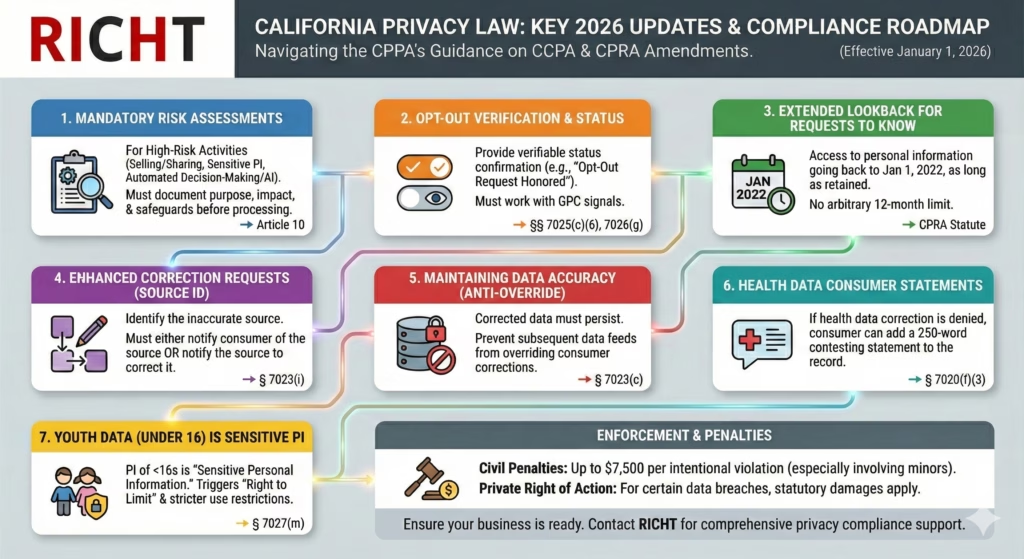
The California Privacy Protection Agency (CPPA) has issued guidance on seven major regulatory updates that businesses must prepare for before January 1, 2026. These amendments to the California Consumer Privacy Act (CCPA) and California Privacy Rights Act (CPRA) regulations represent some of the most significant compliance changes since the original law took effect, introducing new obligations around risk assessments, data accuracy, youth privacy protections, and consumer rights verification.
For businesses operating in California or processing California residents’ personal information, these changes require immediate attention and preparation. Here’s what you need to know.
1. Mandatory Risk Assessments for High-Risk Processing Activities
Perhaps the most significant change: businesses must now conduct formal privacy impact assessments before engaging in several categories of processing activities. This requirement, outlined in Article 10 of the regulations, applies before a business:
- Sells or shares personal information
- Processes sensitive personal information
- Uses or trains automated decision-making technologies
What Risk Assessments Must Include
These aren’t cursory compliance checks. The regulations specify that risk assessments must identify and document:
Purpose and Scope:
- The business’s specific purpose for conducting the processing activity
- The categories of personal information involved
- The operational elements and systems that will handle the data
Impact Analysis:
- Benefits the activity provides to the business and consumers
- Potential negative impacts to consumers’ privacy
- Risks to consumer privacy rights
Safeguards and Mitigation:
- Relevant safeguards implemented to address identified risks
- How these safeguards mitigate negative impacts
- Documentation of risk-benefit balancing
This requirement aligns California with European Union GDPR data protection impact assessment (DPIA) requirements, creating a more robust privacy governance framework. For businesses already conducting privacy compliance assessments, these new mandatory risk assessments may require enhanced documentation and more granular analysis.
Practical Implementation Considerations
Businesses should immediately:
- Inventory all current activities involving selling/sharing personal information, processing sensitive personal information, or using automated decision-making technologies, including via AI and related governance
- Develop standardized risk assessment templates aligned with Article 10 requirements
- Establish processes for conducting assessments before launching new processing activities
- Designate responsibility for risk assessment oversight and approval
- Create documentation retention protocols for completed assessments
The CPPA has indicated that risk assessments may be requested during investigations or audits, making proper documentation critical, and that such submissions will be mandatory in future years, specifically slated as 2028. For guidance on building effective privacy compliance programs that incorporate risk assessment workflows, structured processes are essential.
2. Opt-Out Verification and Status Confirmation
Under the new regulations (§§ 7025(c)(6), 7026(g)), businesses must provide consumers with a verifiable means to confirm the status of their opt-out requests. This applies to all opt-out requests, including:
- Manual opt-out requests submitted through website forms or other channels
- Global Privacy Control (GPC) signals and other opt-out preference signals
- Requests to opt-out of selling personal information
- Requests to opt-out of sharing personal information for cross-context behavioral advertising
Implementation Methods
The CPPA provides specific examples of acceptable verification methods:
Website Display Indicators:
- Displaying “Opt-Out Request Honored” messaging on the website
- Showing status in user account privacy settings
- Using toggle switches or radio buttons to indicate current opt-out status
Account-Based Verification:
- Privacy dashboard showing all active opt-out preferences
- Email confirmations with ongoing status access
- Ability to query current opt-out status through customer service
This requirement addresses a significant gap in previous regulations. Many businesses processed opt-out requests but provided no mechanism for consumers to verify their requests were honored or check their current status. The new rule ensures transparency and gives consumers confidence their privacy choices are being respected.
GPC Implementation Challenges
For businesses implementing Global Privacy Control recognition, this requirement adds complexity. When a browser sends a GPC signal, the business must:
- Recognize and honor the signal
- Provide confirmation to the user that the signal was received and honored
- Maintain the opt-out status across the user’s sessions
- Allow the user to verify their current opt-out status
This is particularly challenging for businesses that don’t maintain user accounts, as they must implement session-based or cookie-based status verification mechanisms.
3. Extended Timeline for Requests to Know
Consumers submitting requests to know (also called data access requests or subject access requests) now have significantly expanded rights. Previously, businesses could limit responses to the 12 months preceding the request.
The New Lookback Requirement
The updated regulations require that businesses provide access to personal information going back to January 1, 2022, to the extent they retain such information. This means:
- If a business retains personal information for 36 months, a consumer’s request to know in 2026 must include data from January 2022 forward
- The lookback period will continue expanding until it reaches the business’s maximum retention period
- Businesses cannot arbitrarily limit responses to 12 months if they actually retain data longer
Practical Implications
This change has significant operational implications:
Data Retrieval Systems:
- Systems must be capable of retrieving historical data across extended timeframes
- Archived data must remain accessible for consumer requests
- Legacy systems or data migrations must preserve accessibility
Response Complexity:
- Longer data histories mean more voluminous responses
- Businesses must ensure they can deliver comprehensive responses within the 45-day response timeline (with possible 45-day extension)
- Data mapping must account for historical data locations and formats
Retention Policy Alignment:
- This requirement creates tension between keeping data for consumer access rights and data minimization principles
- Businesses must balance privacy-by-design concepts (minimizing data retention) with the need to provide comprehensive access
- Data retention schedules should be documented and defensible
For businesses with comprehensive state privacy law compliance obligations across multiple jurisdictions, California’s extended lookback requirement may represent the most demanding standard.
4. Enhanced Requirements for Requests to Correct
The new regulations significantly strengthen consumer correction rights under § 7023(i). When a business receives a request to correct inaccurate personal information, new disclosure obligations apply.
Source Identification Requirement
Businesses must now either:
Option 1: Inform the Consumer
- Provide the consumer with the name of the source from which the inaccurate information originated
- This applies even if the business didn’t create the inaccurate data itself
Option 2: Inform the Source
- Notify the original source that the information is incorrect
- Inform the source that the data must be corrected
- Document this notification
Why This Matters
This requirement addresses a critical weakness in data correction rights. Previously, businesses could correct data in their own systems but had no obligation to address the source of ongoing inaccurate data. This led to situations where:
- Corrected data would be overwritten by subsequent feeds from the original source
- Consumers had to submit multiple correction requests as inaccurate data reappeared
- The original source of misinformation was never notified or corrected
The new rule creates accountability throughout the data ecosystem. Particularly for businesses that obtain personal information from data brokers, this requirement adds operational complexity but significantly enhances data accuracy.
Implementation Challenges
Tracking Data Lineage:
- Businesses must maintain records of data sources for each data element
- Data mapping and data flow documentation becomes critical for correction request compliance
- Systems must be able to trace information back to its origin
Vendor Management:
- Data processing agreements must address correction notification obligations
- Businesses must establish protocols for notifying vendors and data suppliers
- Contracts should include response times for source corrections
Documentation Requirements:
- Each correction request must document either consumer notification of source or source notification
- Records must demonstrate compliance with whichever option the business selected
5. Maintaining Data Accuracy Over Time
Section 7023(c) introduces an ongoing obligation that extends beyond the initial correction: businesses must ensure that corrected information remains corrected. This addresses a common problem where corrections are implemented but later overridden.
The Data Broker Challenge
The regulations specifically call out a common scenario: businesses that receive regular data feeds from data brokers or other third-party sources. The requirement:
- If a consumer requests correction and the business honors it, that correction must persist
- When the business receives subsequent data updates from brokers or other sources, it must prevent those updates from overriding the correction
- The business must implement technical and procedural safeguards to maintain data accuracy
Technical Solutions
Businesses typically need to implement:
Data Quality Flags:
- Mark corrected fields in databases with special flags indicating consumer correction
- Configure data ingestion processes to preserve flagged corrections
- Implement exception handling for correction-protected fields
Prioritization Rules:
- Establish data hierarchy rules that prioritize consumer-corrected data over vendor-supplied data
- Create conflict resolution processes when new data contradicts corrections
- Document the business logic for handling data conflicts
Monitoring and Alerts:
- Implement monitoring to detect when corrections might be at risk of override
- Create alerts when incoming data would overwrite consumer corrections
- Establish review processes for potential data quality conflicts
This requirement reflects California’s increasingly sophisticated approach to data privacy compliance, recognizing that privacy rights must be implemented through ongoing technical controls, not just one-time responses.
6. Consumer Statements for Contested Health Data
Section 7023(f)(3) creates a unique new right specific to health information. When a business denies a consumer’s request to correct health information, the consumer may submit a written statement contesting the accuracy.
The Statement Right
Consumer Rights:
- Submit a statement of up to 250 words contesting the health information’s accuracy
- Request that this statement be made available to anyone who received the contested information
Business Obligations:
- Accept and retain the 250-word consumer statement
- Upon consumer request, provide the statement to any person or entity to whom the business previously disclosed the contested information
- Maintain records of where contested health information was disclosed
Why This Matters
This provision recognizes that health information is particularly sensitive and that disagreements about accuracy can have significant consequences. The right to attach a statement is modeled on similar rights under HIPAA and state medical records laws, but extended to the broader category of health information under California law.
Covered Health Information Includes:
- Medical records and diagnoses
- Prescription and medication information
- Health insurance information
- Biometric health data from wearables and apps
- Mental health information
- Genetic data
- Any information about past, present, or future physical or mental health
For businesses in healthcare, health technology, employee wellness monitoring, or any sector processing health-related data, this creates new operational requirements.
Implementation Requirements
Statement Management System:
- Mechanism for consumers to submit 250-word statements
- Database for storing statements linked to contested health records
- Processes for including statements when disclosing the underlying data
Disclosure Tracking:
- Maintain detailed records of all disclosures of health information
- Be able to identify recipients of specific health data elements
- Implement processes for providing consumer statements to past recipients
Response Procedures:
- Evaluate health data correction requests under appropriate standards
- Document reasons for denial if correction request is rejected
- Notify consumers of their right to submit a 250-word statement
- Implement the statement within required timeframes
7. Youth Data Classified as Sensitive Personal Information
One of the most significant substantive changes: personal information of consumers under 16 years old is now categorized as sensitive personal information under the CCPA. This dramatically expands privacy protections for minors.
What This Change Means
Sensitive Personal Information Status:
- All personal information about individuals under 16 is now “sensitive personal information”
- This triggers the right to limit use and disclosure
- Businesses must honor requests to limit processing of youth data
Right to Limit Implications: When processing personal information of consumers under 16, businesses must:
- Only use it for purposes enumerated in § 7027(m) (permitted purposes), OR
- Honor consumer requests to limit use and disclosure to permitted purposes only
The Permitted Purposes Under § 7027(m)
Businesses can process sensitive personal information (including all data about minors) without triggering the right to limit only for these purposes:
- Performing services reasonably expected by consumers
- Detecting security incidents and protecting against malicious activity
- Debugging and error correction
- Short-term, transient use
- Performing services on behalf of the business
- Quality and safety verification
- Providing advertising or marketing (if not cross-context behavioral advertising)
- Undertaking internal research for technological development
- Undertaking activities to verify or maintain quality or safety
If a business uses youth data for purposes outside this list, such as selling or sharing for cross-context behavioral advertising, it must provide a clear method for limiting such uses.
Practical Compliance Steps
Age Detection:
- Implement age verification or age estimation mechanisms
- Identify users under 16 at point of data collection
- Flag youth data in systems for special handling
Use Limitation:
- Audit current uses of data from users under 16
- Ensure uses align with permitted purposes under § 7027(m)
- Implement controls to prevent impermissible uses of youth data
Right to Limit Interface:
- Provide clear mechanism for consumers (or their parents) to request limitation
- Implement the “Limit the Use of My Sensitive Personal Information” link
- Honor limitation requests within required timeframes
- This CCPA requirement operates alongside federal Children’s Online Privacy Protection Act requirements
- For users under 13, both COPPA parental consent and CCPA sensitive data protections apply
- Ensure compliance systems address both frameworks
This change reflects California’s strong policy position that children’s privacy deserves heightened protection, consistent with recent legislative trends expanding youth privacy protections.
Additional Compliance Deadlines and Requirements
The CPPA’s guidance notes that the seven items above are not exhaustive. Businesses should be aware of additional requirements that may apply:
Cybersecurity Audits
For certain businesses, particularly those processing significant volumes of personal information or operating in high-risk sectors, cybersecurity audits may be required. These audits must:
- Assess the business’s cybersecurity practices
- Evaluate compliance with reasonable security requirements
- Be conducted by qualified independent auditors
- Be updated periodically based on risk
For businesses subject to other security frameworks like NYDFS Cybersecurity Regulation, coordination between compliance programs is essential.
Automated Decision-Making Technology
Beyond the risk assessment requirement, businesses using automated decision-making technologies face additional obligations:
- Notice requirements informing consumers about automated decisions
- Rights to opt-out of certain automated profiling
- Access rights specific to automated decision-making logic
- Non-discrimination protections
For comprehensive guidance, see our analysis of AI governance requirements and AI chatbot compliance.
Data Broker Registration
Businesses meeting California’s data broker definition must register with the CPPA and comply with specific disclosure and consumer rights obligations.
Enforcement and Penalties
The CPPA continues to demonstrate its commitment to active enforcement. Businesses should note:
Civil Penalties:
- Up to $2,500 per violation
- Up to $7,500 per intentional violation or violations involving minors
- Penalties can accumulate quickly across multiple consumers
Private Right of Action:
- For certain data breaches, consumers can sue directly
- Statutory damages of $100-$750 per consumer per incident
Recent Enforcement Examples: As detailed in our analysis of CPPA enforcement actions, the agency is actively investigating and bringing enforcement actions, including recent settlements with major retailers.
Preparing for January 1, 2026: An Action Plan
With the effective date approaching, businesses should take immediate steps:
Q4 2025 (Now)
Assessment Phase:
- Conduct comprehensive audit of current CCPA compliance status
- Identify gaps relative to January 2026 requirements
- Review all processing activities requiring risk assessments
- Inventory data flows from third-party sources (particularly data brokers)
- Assess current age detection and youth data handling practices
Planning Phase:
- Develop risk assessment templates and processes
- Design opt-out status verification mechanisms
- Enhance data subject access request systems for extended lookback
- Plan correction request process updates
- Map data sources for correction obligation compliance
November-December 2025
Implementation Phase:
- Deploy technical solutions for maintaining corrected data
- Implement opt-out status verification features
- Update privacy notices and disclosures
- Configure systems to flag youth data as sensitive
- Establish right to limit mechanisms for sensitive data
Testing Phase:
- Test consumer rights request workflows
- Verify opt-out confirmation mechanisms work correctly
- Validate data correction persistence across data updates
- Test youth data controls and limitations
- Conduct user acceptance testing on new features
January 2026 and Beyond
Launch and Monitor:
- Activate all new compliance features January 1, 2026
- Monitor consumer rights requests for issues
- Track metrics on request volumes and response times
- Document risk assessments for all qualifying activities
- Establish ongoing review cycles for compliance
Continuous Improvement:
- Gather feedback on new processes
- Refine workflows based on operational experience
- Monitor CPPA guidance and enforcement actions
- Update privacy compliance programs based on evolving requirements
Coordination with Other Privacy Laws
California businesses subject to multiple privacy regimes should coordinate compliance efforts:
State Privacy Laws: The U.S. now has comprehensive privacy laws in multiple states. Many requirements similar to these California updates are emerging in:
- Virginia Consumer Data Protection Act (VCDPA)
- Colorado Privacy Act (CPA)
- Connecticut Data Privacy Act (CTDPA)
- Utah Consumer Privacy Act (UCPA)
- And many others taking effect in 2025-2026
Federal Privacy Laws:
- COPPA requirements for users under 13
- HIPAA for covered entities and business associates
- GLBA for financial institutions
- Sector-specific requirements
International Privacy Laws:
- GDPR for businesses with EU operations or EU customer data
- Other international frameworks requiring coordination
The most effective compliance strategies identify common requirements across frameworks and implement unified solutions rather than creating siloed compliance programs for each law.
The Broader Context: California’s Privacy Leadership
These updates reflect California’s continuing evolution as the de facto national privacy standard. The state has:
- Expanded from basic notice and choice to comprehensive privacy governance
- Moved from reactive compliance to proactive privacy program requirements
- Strengthened consumer rights with verification and transparency mechanisms
- Enhanced protections for vulnerable populations (minors)
- Addressed real-world data accuracy challenges in the broker ecosystem
As noted in our analysis of comprehensive privacy law development, California continues to set trends that other states follow. Businesses should view CCPA compliance not as a California-specific obligation but as preparation for nationwide privacy requirements.
Get Guidance on 2026 CCPA Compliance
The January 1, 2026 updates represent the most significant expansion of CCPA obligations since the CPRA amendments took effect in 2023. From mandatory risk assessments to extended data access rights to youth data protections, businesses face complex new requirements with potentially significant penalties for non-compliance.
Preparing for these changes requires:
- Technical implementation across data systems and consumer-facing interfaces
- Process development for risk assessments, corrections, and enhanced consumer rights
- Policy updates reflecting new obligations
- Training for teams handling consumer requests
- Ongoing monitoring and compliance management
Don’t wait until January 2026 to start preparing. The technical and operational changes required for compliance take time to implement properly.
How We Can Help
RICHT provides comprehensive privacy compliance services, including:
- CCPA/CPRA compliance assessments and gap analysis
- Privacy program development and implementation
- Privacy policy and notice drafting
- Data mapping and data flow analysis
- Privacy impact assessment frameworks
- Consumer rights request process design
- Multi-state privacy compliance strategies
- Vendor contract review and data processing agreement negotiation
Contact us to discuss your specific compliance needs and ensure your business is ready for the 2026 updates.
Additional Resources
- Full Text of CCPA Regulations – California Privacy Protection Agency
- Building an Effective Privacy Compliance Program: A Comprehensive Guide
- CPPA Enforcement Spotlight: Tractor Supply Investigation
- Annual Privacy Policy Updates: From Optional Best Practice to Enforcement Priority
- The California Consumer Privacy Act (CCPA): Comprehensive Overview
This article provides general information about California privacy law developments and should not be construed as legal advice. Privacy compliance requirements vary based on your specific business model, data practices, and jurisdictions. Consult with legal counsel to address your particular compliance needs.